From Government Schools to Private Campuses: Nitek's Interactive Flat Panels Are Transforming Classrooms Across India
Written by Milap Mehta, EdTech Specialist at Nitek IFP
Milap Mehta
Official Blog Contributor
One Panel at a Time: How Nitek Is Bringing Smart Classrooms to Every Corner of India
There is a moment that every Nitek installation team will tell you about. The screen lights up for the first time. A teacher who was a little skeptical takes one step closer. A child in the front row lets out a soft sound of wonder. And then someone reaches out and touches the glass. When the panel responds and a line appears exactly where the finger pressed, the room shifts.
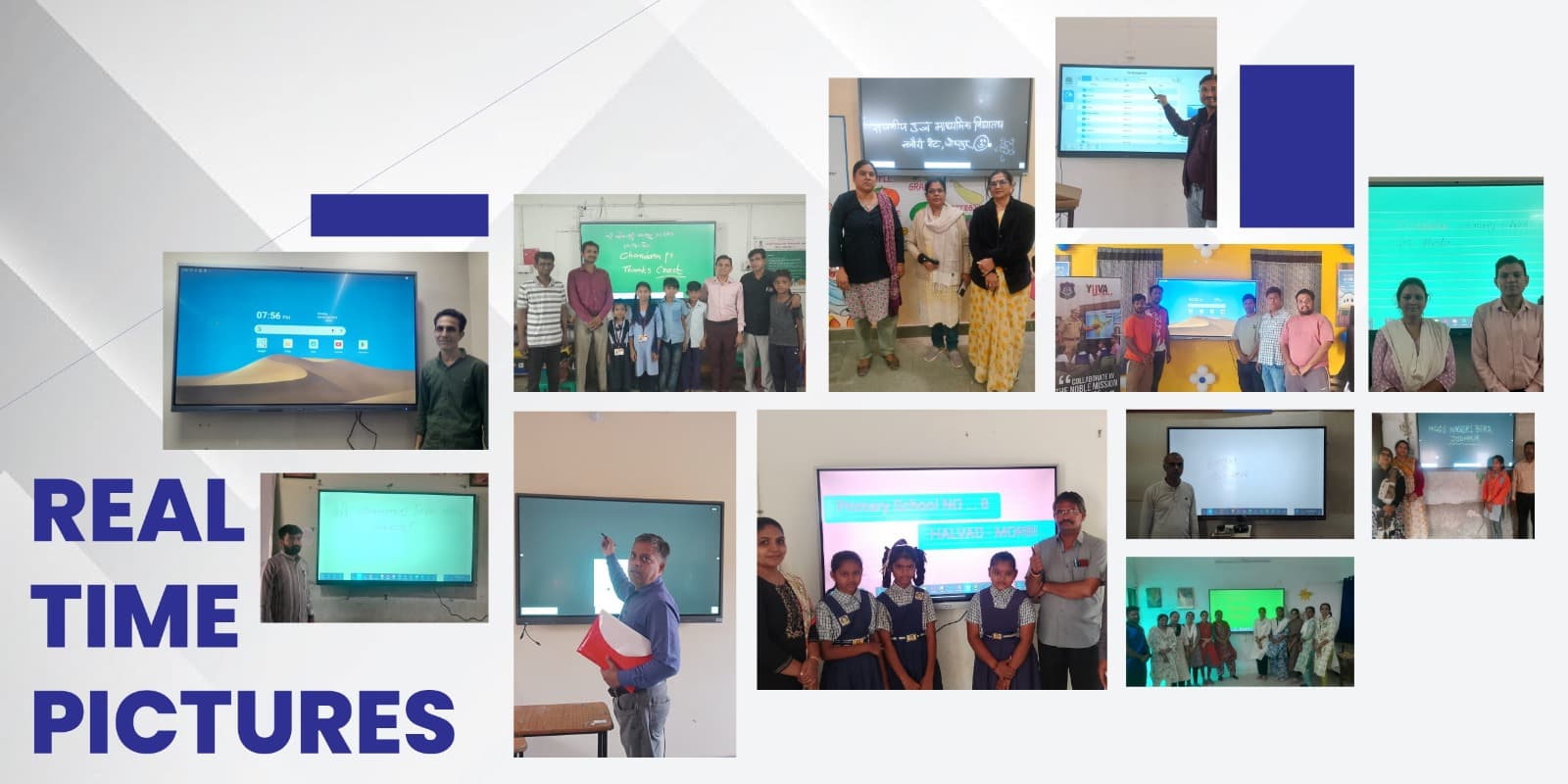
That moment has played out across hundreds of classrooms in India. In busy municipal schools and sprawling private campuses. In Jharkhand, in Hyderabad, in the towns of Gujarat and the districts of Karnataka. This is the story of what Nitek's pan-India presence has meant for the teachers and students on the other side of that screen.
Karnataka: Kundapura and Haveri Districts
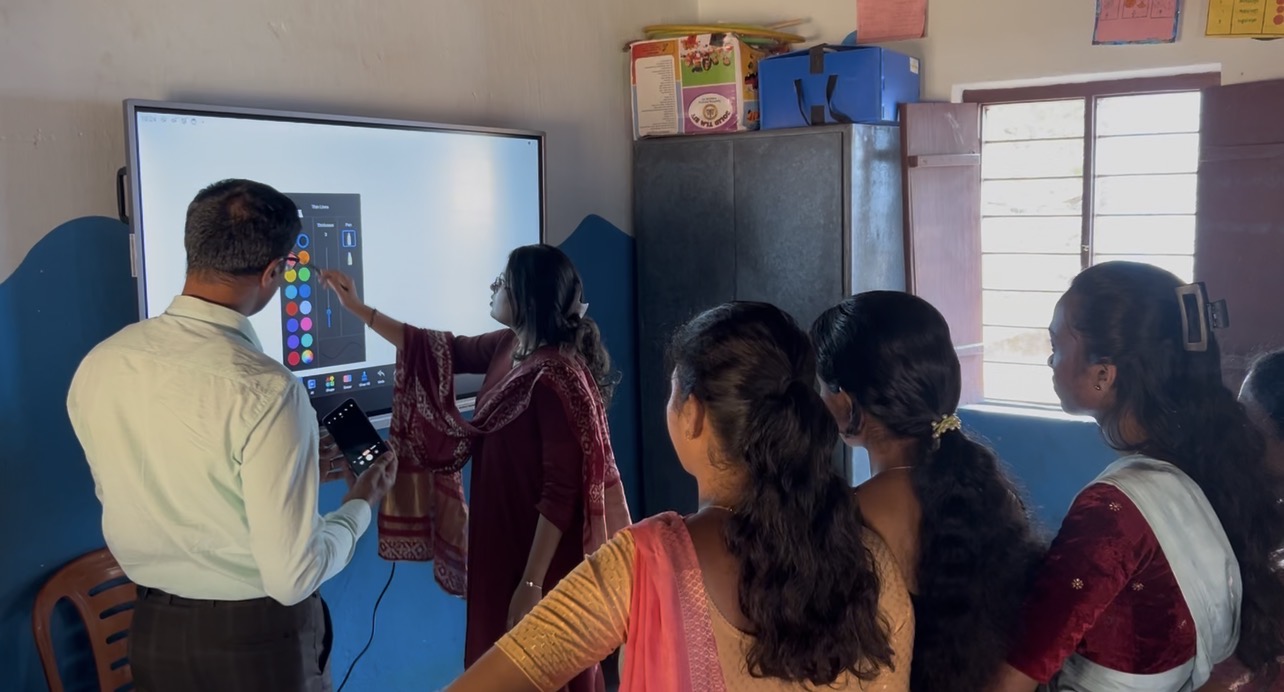
Karnataka presents an interesting challenge. Private schools in Bengaluru are savvy and discerning. They have seen every brand and every pitch, and they know when a demo is better than the real product. What surprised them about Nitek's best interactive flat panel lineup was the software. When a coordinator sat through the demo and watched the handwriting-to-text conversion work in real time, the response was direct:
"I have seen this feature advertised by four other companies. None of them actually worked in a demo. This one just worked."
Running Android 14, Nitek's panels support every modern educational application that Karnataka's schools use: Google Classroom, Zoom, Khan Academy, and custom school management portals.
But the more meaningful story comes from Kundapura and Haveri districts, where Nitek has installed panels in government schools serving communities that had very limited access to digital tools. In one such school, the first geography class using satellite imagery on the 4K screen was described by everyone present as a turning point. Students who had only ever seen the world in a textbook were suddenly zooming in, touching maps, seeing places they had only read about.
A school head there put it simply: "Before, world geography was something in a book. Now, the children can see it. They can touch it. It is theirs."
That is the reach Nitek is building in Karnataka: from private institutions in the city to government schools in coastal and interior districts where the impact is perhaps most needed.
Hyderabad, Telangana
Hyderabad's schools, both government-aided and private, have long been under pressure to modernise. Nitek has installations running across both sectors here, and the pattern is consistent: the interactive flat panel for school works equally well in a well-funded private institution and in a government school where this might be the first major technology investment in years.
In one government school, the panel changed what was possible inside a single classroom. A teacher who had spent years working with chalk and a worn-out blackboard began layering her lessons using the infinite digital whiteboard, overlaying diagrams on top of written equations, playing relevant video clips without moving away from the board. The 4K UHD display ensured that students sitting at the very back could read every character clearly.
"It writes like a pen. I can write my equations exactly as I would on the board, but now even the child sitting at the back corner can see everything clearly."
Word spreads quickly in a school cluster when something genuinely works. Other schools in the same area began requesting demos shortly after.
Pune, Maharashtra
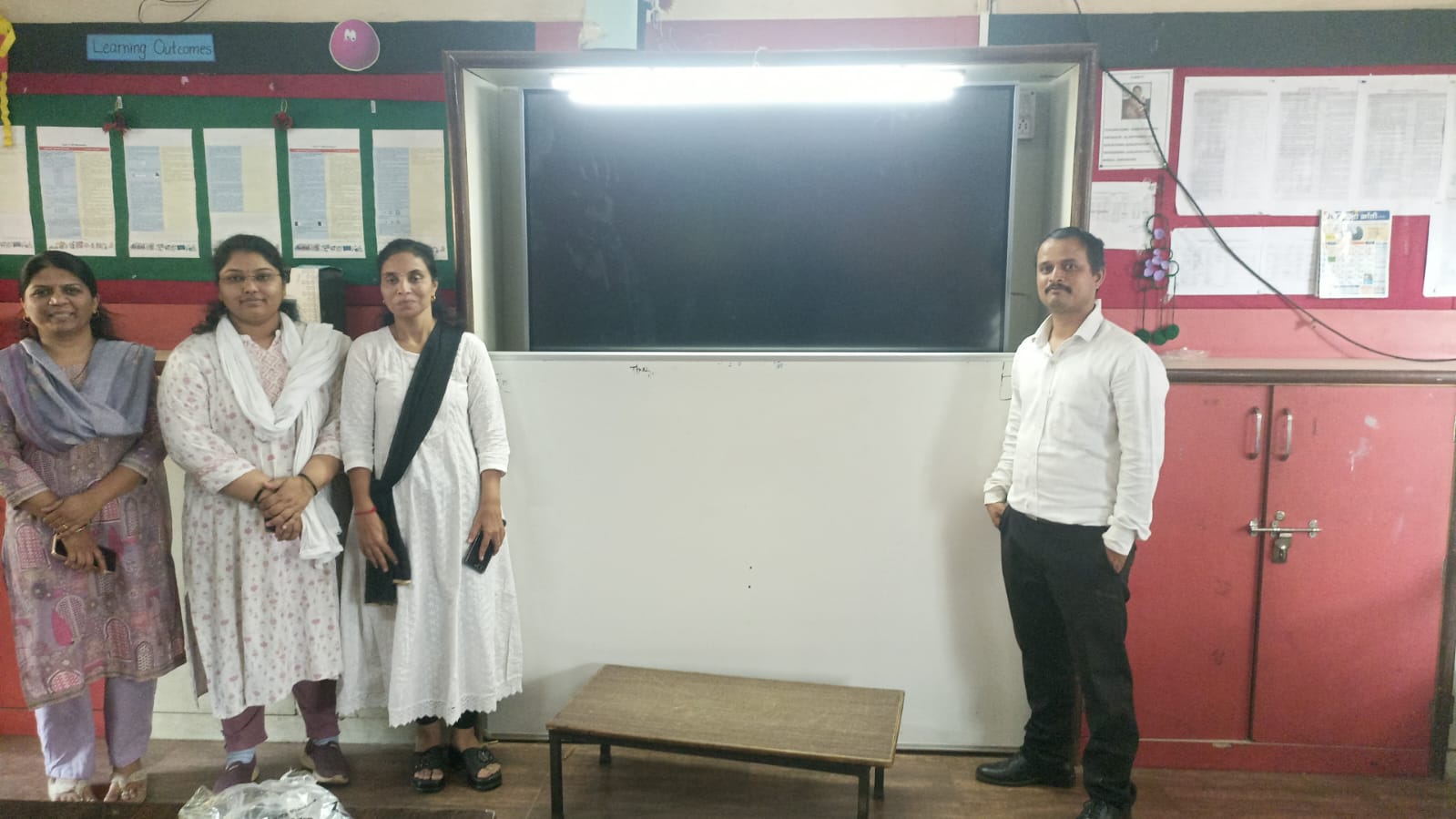
Pune takes its academics seriously. Engineering coaching institutes, Marathi-medium schools, international campuses, and autonomous colleges all coexist here, each with different needs from their smart classroom India technology.
Nitek's installations span both private institutes and government-aided schools in the region. In a government school where resources had always been stretched, the arrival of an interactive display for education changed the daily routine in ways the administration had not fully anticipated. Teachers who had never considered themselves "technology people" were using the built-in quiz tools within their first week. Students who were often disengaged began looking at the board again.
At a private engineering coaching centre with a long, deep classroom, the 86" panel with anti-glare glass and Wi-Fi 6 connectivity transformed how complex problems were taught. The wireless screen mirroring meant a student's working could be pulled up on the main panel, compared side by side with another approach, and discussed by the whole group. At the end of one session, no one packed up when the bell rang. The explanation was still going, and no one wanted it to stop.
"It did not feel like studying. It felt like we were solving something together."
Mumbai, Maharashtra
Mumbai's schools are busy, crowded, and stretched. The interactive flat panel for school here has to work without exceptions. Nitek has installations across both private schools and municipal-assisted institutions in the city, and the commitment is the same in both.
A senior administrator at one private school made the after-sales support the central point of the purchase decision. A previous vendor's panel had gone dark and the support team had taken over a week to respond. With Nitek, the question was asked directly: what happens if a panel stops working on the morning of a critical session? The answer, covering a dedicated support contact, remote troubleshooting, and an on-site engineer SLA, settled it.
The installations have been running without significant downtime. Screen recording has become a daily feature. Teachers record their lessons, upload them to the school's digital library, and absent students no longer fall behind. Two taps. Done.
"Our teachers used to dread the technology. Now they dread the days when the power goes out and they have to go back to the old whiteboard."
In municipal schools across the city, the impact is less about productivity and more about access. For students who do not have devices at home, the interactive display for education is their primary window into visual, digital learning. Nitek's presence in these classrooms is part of what makes the pan-India story real.
Gujarat
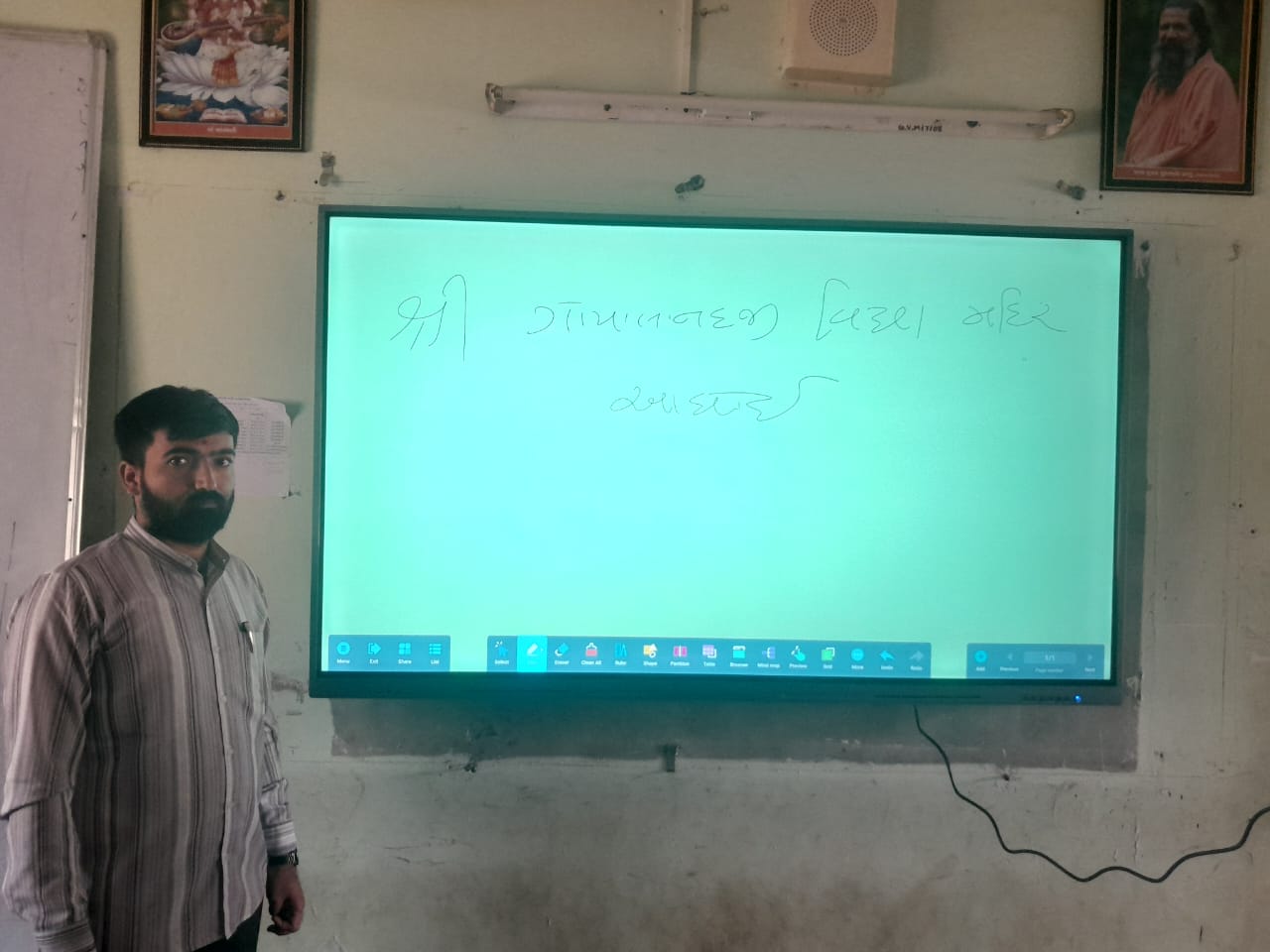
If there is one state where Nitek's reputation has taken the deepest root, it is Gujarat. The best interactive flat panel in Gujarat has become synonymous with Nitek among school administrators in Ahmedabad, Surat, Vadodara, and Rajkot.
The state's school ecosystem is demanding. Private schools invest seriously and expect serious results. Early Nitek deployments involved evaluation teams that tested 20-point multi-touch, checked the OPS slot for future expansion, and called reference schools that had been using the panels for over a year. The feedback was consistent: the panels were performing as well on day 365 as on day one, with no touch degradation and no software slowdowns. The 3-year comprehensive warranty had not needed to be invoked.
Gujarat is also where Nitek's government school installations have been among the most visible. In districts where schools serve large rural populations, the interactive flat panel for school has become a shared resource used by multiple teachers across subjects throughout the day. The 75" panels handle the varying lighting conditions of these classrooms, and the anti-glare tempered glass ensures visibility even in rooms with direct sunlight on one side.
One image from a classroom in a smaller town captures something that no specification sheet can. A Class 4 science teacher was demonstrating the water cycle using an animated diagram. A girl in the third row stood up and asked, "Can I come and touch the cloud?" She walked to the board, pressed the animated rain cloud, and watched it respond under her finger.
"I have taught the water cycle many times. But I think she will remember it because she touched the rain."
Rajasthan
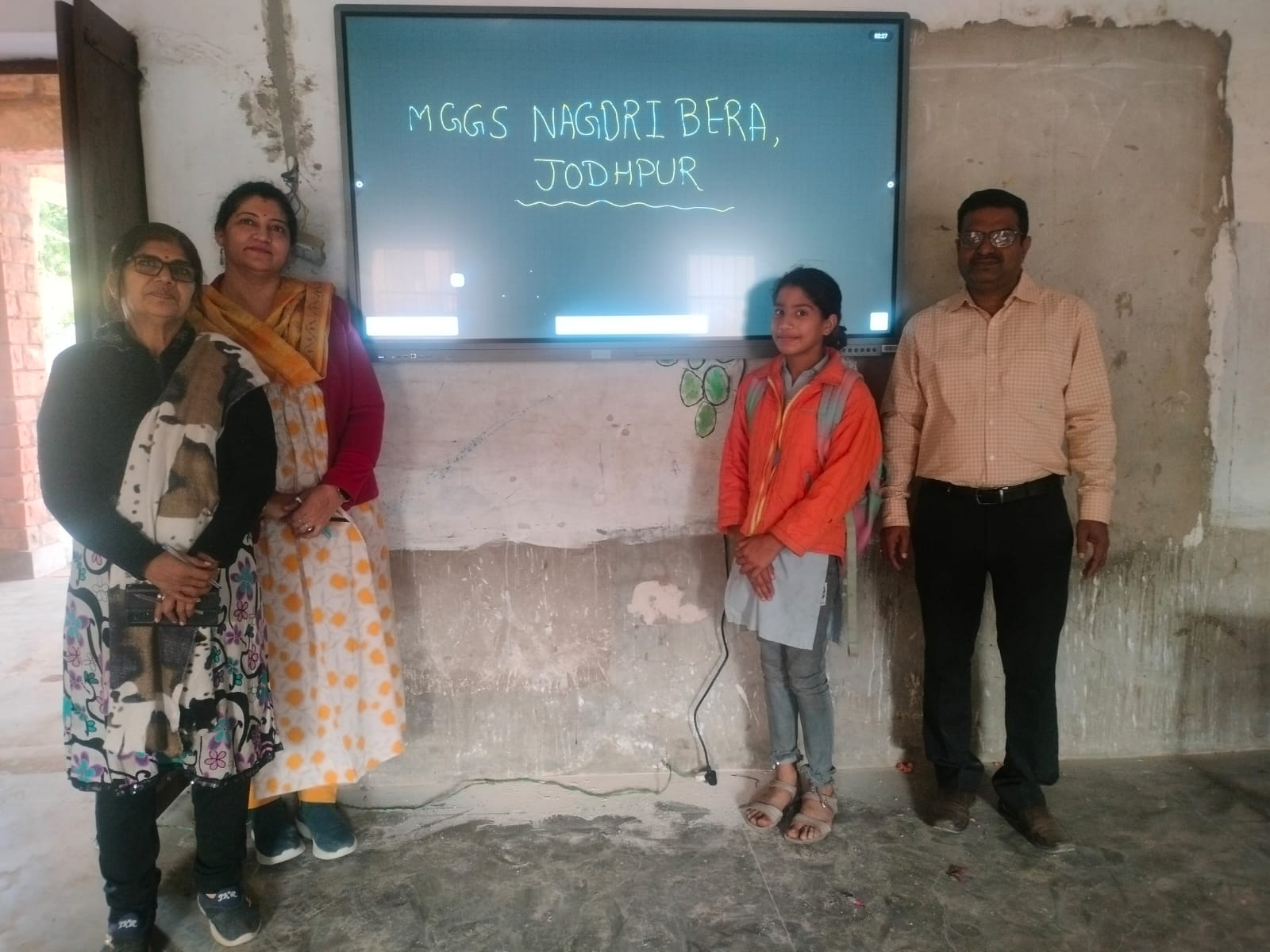
Rajasthan's education landscape spans modern private campuses in Jaipur and schools in smaller towns spread across vast distances. The interactive flat panel for school here needs to be resilient as much as it needs to be capable.
Nitek's 75" panels have become the default recommendation for Rajasthan's standard classrooms: large enough to be seen from the back, efficient enough to run comfortably on a standard connection. In government schools in smaller towns and semi-rural areas, these installations often represent the most significant infrastructure investment the school has seen in years.
In one such government school, a young science teacher used the IFP for the first time without any prior training session. She opened the built-in quiz tool, created an interactive quiz in a few minutes, and within the session her students were answering questions, raising hands, and laughing. The annotation feature has proven especially useful in Rajasthan's mathematics-heavy teaching culture: problems can be solved live on the board, annotated, exported, and shared directly without printing or scanning.
"This is what I thought teaching would feel like when I chose this career."
That reaction, coming from a teacher in a government school in a smaller Rajasthan town, says more about Nitek's mission than any brochure could.
Jharkhand
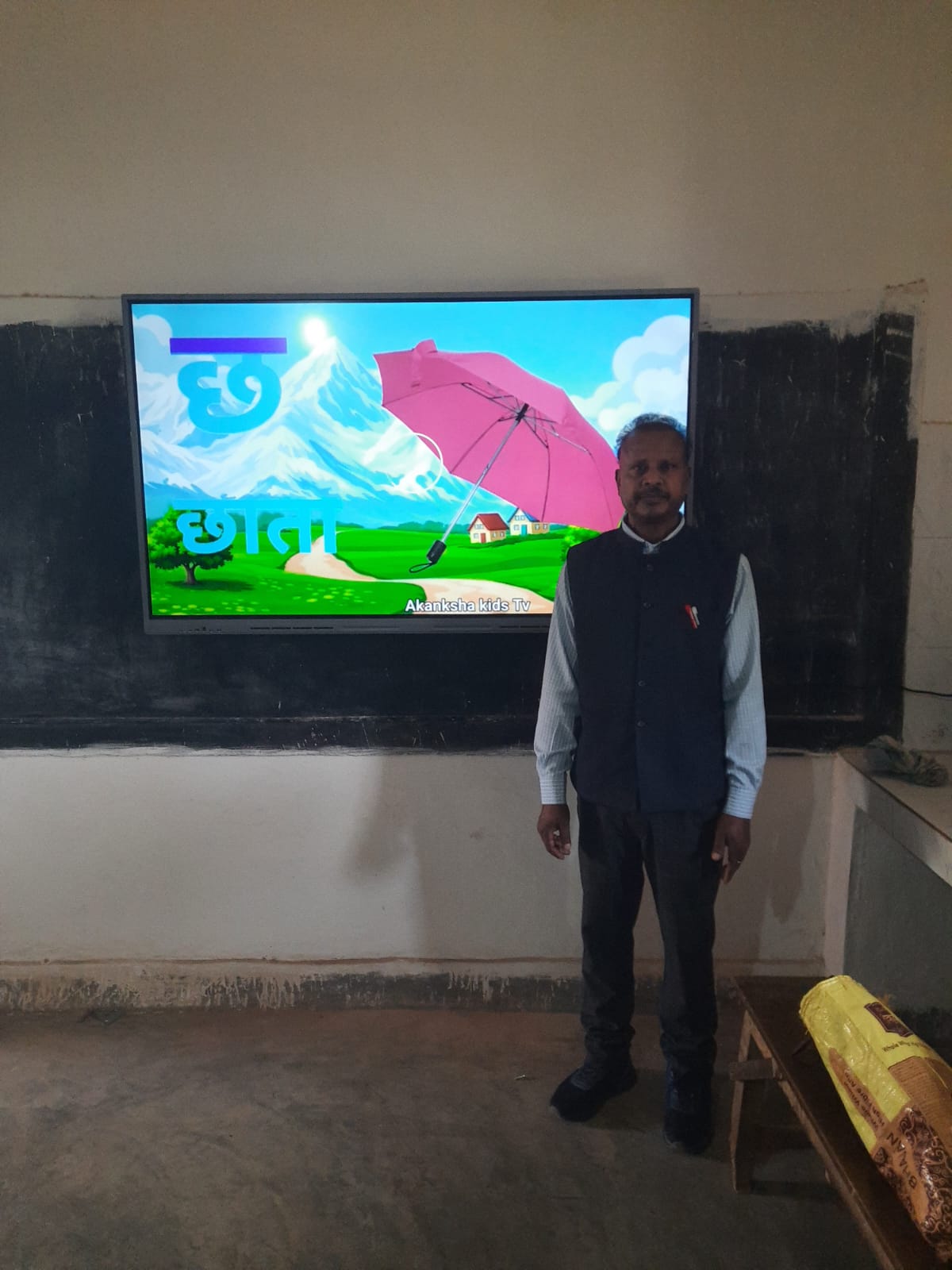
Jharkhand's growing private schools and government institutions alike are part of Nitek's footprint. In Ranchi and Jamshedpur, newer private institutions have been expanding rapidly and their leadership has been deliberate about what technology they bring in.
A Nitek installation at one school was observed by several principals from nearby institutions who had come informally to see it in action. During a Class 6 English lesson, the teacher played an audio clip, annotated key vocabulary on the displayed text, and split the class into groups. Each group sent a student to write on the board using the 20-point multi-touch. The visiting principals exchanged glances more than once. Several began their own procurement conversations shortly after.
In government schools in the state, the IFP has introduced a kind of learning that was not previously available. For students in areas with limited access to devices or internet at home, the classroom panel is where visual, interactive education happens. Nitek's presence in these schools is intentional, not incidental.
"My students used to look out the window. Now they look at the board. I do not know what more I can ask for."
Bihar
Bihar has one of the largest student populations in India and some of its most motivated learners. The smart classroom India conversation here is not about novelty. It is about leverage: giving teachers tools that let them do more with the time and attention they already have.
Nitek's installations in Bihar cover premier coaching institutes and private schools in Patna, as well as government schools in surrounding areas where the panel is often the first piece of modern educational technology in the classroom. The 4K UHD display, Wi-Fi 6 connectivity, and OPS slot for future expansion were key considerations for institutes that think carefully before investing.
In one government school, the panel arrived and the immediate change was visible in attendance. Word had spread among students before the installation was even complete. The first week of lessons using the interactive display for education saw the highest classroom engagement the teachers there could recall.
At a private coaching institute, a teacher showed up well before class on the morning after installation, having spent time over the weekend exploring the panel on his own. He had already set up lesson templates, configured his annotation colour scheme, and tested the screen recording feature.
"I teach three batches a day. Now I can record my best session once, and the other batches can use it as revision. I will have more time to actually talk to my students."
That is the best interactive flat panel in India at work: not replacing what great teachers do, but giving them more room to do it.
The Panel Is the Beginning, Not the End
Across eight states, a pattern holds. The technology matters, but what schools remember is that Nitek showed up after the installation too. The 3-year comprehensive warranty covering parts, labour, and on-site visits. Teacher training included as standard. A dedicated support contact and real response times.
The product itself earns its place: anti-glare tempered glass for India's variable classroom lighting, 20-point multi-touch at under 1ms response, Android 14 for full app compatibility, and software built for how Indian teachers actually teach. Annotation over any app, infinite digital whiteboard, wireless screen mirroring, built-in quiz tools and screen recording.
And underpinning all of it: a commitment to being in government schools and rural classrooms, not only in private institutions where margins are higher. Real impact at the ground level is the measure Nitek holds itself to.
The IFP was always going to come to India. Nitek made a choice to build it for India, from the ground up. The results are visible in eight states, and growing.
Want to bring this to your school? Request a free Nitek demo today.